
Royal purple has always had a strange relationship with fashion. It is never just a color. It behaves more like a signal. Even when it appears in a small detail, it changes how an outfit is read. A black coat with a purple lining suddenly feels intentional. A simple dress in violet shifts from basic to expressive without needing any extra styling. For a long time, fashion treated this color carefully, using it in controlled doses for evening wear or statement pieces.
That restraint is breaking. Designers are not only revisiting royal purple, they are building entire moods around it again. It is showing up in structured tailoring, oversized knits, glossy satin dresses, and streetwear that would normally rely on neutral palettes. The return feels less like a nostalgic throwback and more like a correction after years of visual minimalism dominating wardrobes.
What makes this comeback interesting is not just that purple is back, but how confidently it is being used. It is no longer reserved for drama or special occasions. It is entering everyday styling in ways that feel surprisingly natural.
A Color That Never Lost Its Status
Royal purple carries history in a way few colors do. Long before modern fashion systems existed, purple dyes were rare and difficult to produce. In many ancient societies, this made the color expensive and exclusive. It became associated with authority, leadership, and ceremonial importance.
That historical weight still lingers in how people perceive it today. Even without thinking about it consciously, purple often feels more elevated than other shades. It has a presence that sits slightly above everyday color choices, even when used in casual clothing.
The important part is that modern fashion is not trying to recreate that past. Instead, it is borrowing the emotional impact and reshaping it for contemporary styling.
Some of the long-standing associations include:
- Historical links to royalty and aristocracy
- Use in ceremonial and religious garments
- Rare dye origins that made it a luxury in ancient times
- Academic and institutional symbolism in robes and regalia
- Continued use in luxury branding and high fashion
These associations give the color depth before a designer even touches it.
Why Fashion Is Moving Back Toward Strong Color Identity
For several years, fashion leaned heavily into muted palettes. Beige dominated interiors and wardrobes. Black became the default for everything from streetwear to luxury minimalism. Grey, cream, and soft browns created a unified visual language that felt clean and modern.
But something happened along the way. When everything started to look harmonious, it also started to feel visually repetitive. Outfits became easier to wear but harder to remember. The eye adjusted too quickly.
Color returns when fashion needs contrast again. Royal purple fits that need perfectly because it creates impact without relying on patterns or complexity. It is a single decision that changes the entire tone of an outfit.
Designers are reintroducing it in different directions:
- Deep plum in structured blazers and coats
- Bright violet in experimental streetwear pieces
- Soft lavender in romantic and flowing silhouettes
- Metallic purple finishes in accessories and evening wear
The variety inside the color family is what makes it usable across different style categories.
How Royal Purple Works in Real Wardrobes
Runway styling often exaggerates colors to make them visible under lights and cameras. Everyday styling is different. Clothes need to work in motion, in natural lighting, and in repeated wear. This is where royal purple becomes more interesting than expected.
It adapts depending on what it is paired with. In a neutral outfit, it becomes the focal point. In a colorful outfit, it blends into a larger story. And in minimal styling, it carries the entire visual weight on its own.
It also behaves differently depending on fabric. In knitwear, it feels soft and grounded. In satin, it feels dramatic. And in cotton or denim, it becomes more relaxed and wearable.
Some common ways it appears in everyday styling include:
- Purple knit sweaters paired with denim and sneakers
- Violet blazers layered over monochrome outfits
- Lavender tops used as soft color accents
- Purple handbags breaking neutral outfits
- Statement coats worn over simple basics
What matters most is that it does not require complicated styling rules. It works when everything else is simple.
The Psychology Behind Purple’s Return
Color psychology is not exact science, but it helps explain why certain shades feel easier to wear at different times. Purple sits between blue and red, which gives it a dual emotional character.
Blue tends to feel calm, stable, and structured. Red tends to feel energetic, bold, and attention-driven. Purple exists between those two states. It carries calmness without becoming passive and intensity without becoming aggressive.
That balance is important in modern fashion because many people want clothing that feels expressive but not overwhelming. Royal purple offers that middle space.
It is often perceived as:
- Confident without being loud
- Creative without being chaotic
- Elegant without being rigid
- Distinct without relying on logos
This emotional flexibility is a major reason it is returning across multiple fashion segments at once.
From Runway Experiment to Everyday Adoption
The return of royal purple started where most fashion shifts begin, on the runway. Designers reintroduced saturated colors after years of minimal dominance. Purple became one of the first shades to reappear in bold, intentional ways.
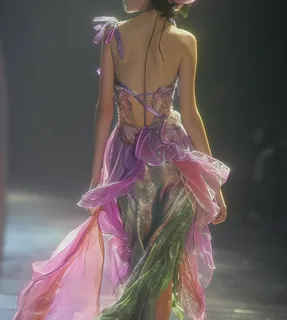
At first, it showed up in sculptural gowns and high-impact couture pieces. These were not meant for everyday wear. They were statements. Then the color began appearing in more wearable collections, especially in outerwear and knitwear. From there, it moved into street style.
That transition matters because it shows the color is not limited to one aesthetic identity. It can exist in luxury fashion, editorial styling, and everyday wardrobes without losing meaning.
Runway interpretations often include:
- Heavy velvet and silk fabrics
- Dramatic silhouettes and volume
- Strong lighting that deepens saturation
Street style interpretations include:
- Casual hoodies and sweaters
- Relaxed tailoring
- Simple color blocking with neutrals
Both directions support the same revival, just in different languages.
Why This Color Revival Feels Different
Many fashion colors cycle in and out of relevance, but not all of them stay. Royal purple feels different because it is not tied to a short-lived trend concept. It is tied to a broader shift in how people want to dress.
After years of minimalism, there is growing interest in clothing that feels more expressive again. Not maximalist for the sake of attention, but intentional in a way that feels personal. Color becomes one of the easiest ways to achieve that.
Royal purple fits this moment because it does not require full wardrobe change. One piece can shift the entire mood of an outfit.
That is usually how lasting color movements begin. Not loudly, but steadily, until the change becomes visible everywhere.
Royal Purple on the Runway and in Celebrity Styling
If Part 1 explains why royal purple is returning, Part 2 is where it becomes visible in real fashion moments. The runway is usually the first place where a color starts to feel “back,” but it takes celebrity styling and street visibility for it to fully enter everyday culture.
On runways, royal purple rarely appears quietly. Designers tend to push it toward dramatic silhouettes, rich fabrics, and strong lighting contrasts. Velvet gowns, sculptural coats, and satin dresses in deep violet are common because these materials hold saturation in a way that feels almost cinematic under stage lights. The goal is not subtlety. It is impact.
Celebrities then translate that impact into something more readable for public fashion culture. A purple gown on a red carpet does not just exist as clothing, it becomes a moment. It is photographed, analyzed, reposted, and remembered in fragments. Over time, those moments build familiarity with the color again.
Recent styling directions show a clear pattern:
- Red carpet gowns in deep plum and royal violet
- Street style looks with oversized purple outerwear
- Monochrome purple outfits styled for editorial shoots
- Accessories in violet tones used as focal points
- Layered purple textures in fashion campaigns
The shift is not accidental. Stylists are actively using purple to create looks that stand out in a crowded visual environment where many outfits already lean toward neutral palettes.
How Designers Are Rewriting Purple for Modern Fashion
One of the reasons royal purple feels current again is because it is not being used in a traditional way. Designers are not trying to recreate historical looks or overly formal associations. Instead, they are breaking the color into different versions that work across multiple fashion categories.
In luxury fashion, purple is often used in controlled, precise ways. Tailored coats in deep violet wool or structured dresses in matte satin create a sense of quiet authority. In contrast, streetwear brands tend to push brighter or more saturated versions of the same color, often pairing it with graphic elements or oversized silhouettes.
This dual identity allows purple to exist in both high fashion and everyday clothing without feeling out of place.
Design directions currently shaping its use include:
- Structured tailoring in dark plum tones
- Oversized casual wear in bright violet shades
- Minimalist monochrome outfits built around purple
- Texture-focused designs using velvet, silk, and knitwear
- Hybrid street-luxury pieces combining purple with neutral bases
What is important here is that purple is not locked into one aesthetic lane. It is being reshaped depending on audience and context.
Styling Royal Purple Without Overthinking It
A major reason some colors fail in everyday wardrobes is that they feel complicated to style. Royal purple avoids that problem when used correctly because it naturally acts as a statement piece. It does not need layers of explanation or additional visual support.
The simplest way to use it is to let it carry one part of the outfit while everything else stays grounded. That could mean a purple coat over an all-black outfit or a violet sweater paired with basic denim.
Some practical styling formulas include:
- Purple knit + straight-leg jeans + white sneakers
- Violet blazer + black trousers + minimal jewelry
- Lavender dress + neutral trench coat + simple heels
- Purple hoodie + grey joggers + clean trainers
- Deep plum bag + beige outfit as a contrast point
The goal is not to build complexity. It is to let the color do the work while the rest of the outfit supports it quietly.
Purple in Accessories and Luxury Branding
Even when purple is not used in full garments, it has a strong presence in accessories. Bags, shoes, scarves, and jewelry often use violet tones to introduce color without overwhelming an outfit. This is where the color becomes more approachable for people who are not used to wearing bold shades.
Luxury brands also use royal purple strategically because it communicates richness without needing explanation. It feels expensive in a way that is not tied to logos or branding. That is why it often appears in packaging, campaign visuals, and limited-edition product lines.
Common accessory applications include:
- Structured handbags in deep violet leather
- Silk scarves with purple accents
- Statement heels in satin purple finishes
- Jewelry with amethyst-inspired tones
- Gradient purple eyewear or tinted lenses
These smaller touches allow people to participate in the trend without fully committing to bold outfits.
Cultural Mood and Why Purple Feels Right Again
Fashion trends are rarely just about clothing. They reflect wider cultural moods. The return of royal purple fits into a broader shift where people are moving away from uniform aesthetics and toward more expressive personal style.
After years of neutral-heavy dressing, there is a growing desire for individuality. Not loud individuality, but visible personality. Purple fits that space because it feels distinct without being overwhelming.
It also carries a subtle emotional duality. It feels calm in softer shades and powerful in deeper tones. That flexibility makes it adaptable to different moods, seasons, and contexts.
This is why it is showing up across different fashion categories at the same time rather than staying confined to one niche.
Outfit Ideas That Show the Shift in Practice
To understand how royal purple is being used today, it helps to look at how complete outfits are being built around it. The key shift is that purple is no longer an accent only. It is becoming a foundation color in some wardrobes.
Examples of modern styling approaches include:
- A full monochrome violet outfit with mixed textures like knit and satin
- A structured purple coat layered over neutral basics for contrast
- A casual purple sweatshirt styled with tailored trousers for balance
- A purple slip dress paired with minimal gold accessories
- A violet bag used as the only color element in a beige outfit
These combinations show that the color can operate in both minimal and expressive directions depending on styling intent.
Will Royal Purple Stay or Fade Again?
The question with any color comeback is always the same. Is it temporary or does it stay? Royal purple has a stronger chance than many recent color revivals because it is not tied to a single seasonal aesthetic. It is not dependent on one fabric trend or one styling movement.
Instead, it fits into a broader shift toward expressive dressing. That means even if its popularity rises and falls slightly over time, it is unlikely to disappear completely again.
It has enough history, flexibility, and visual strength to remain part of fashion’s long-term palette.
Frequently Asked Questions
1. Is royal purple a trend or a long-term color shift?
It is more of a long-term shift because it fits into the broader movement toward expressive and personality-driven fashion rather than a short seasonal trend.
2. How can beginners start wearing royal purple?
Start with accessories or single pieces like sweaters, bags, or jackets, and pair them with neutral colors to keep the outfit balanced.
3. Does royal purple work in professional outfits?
Yes, especially in structured blazers, tailored coats, and subtle accents that add depth without overpowering a formal look.
4. What colors pair best with royal purple?
Black, white, beige, grey, denim, and metallic tones like gold and silver all work well depending on the desired mood.
5. Why do designers keep returning to purple?
Because it carries emotional depth, works across multiple fashion categories, and creates strong visual contrast without needing complex design elements.
Conclusion:
Royal purple’s return is not just about aesthetics, it reflects a wider shift in how fashion approaches identity, contrast, and expression. After years of muted dressing, this color brings back a sense of clarity and presence that feels both modern and grounded. It does not ask for attention in an aggressive way, but it naturally holds it when used with intention, which is exactly why it is becoming impossible to ignore again.
Call to Action
Try incorporating royal purple into your wardrobe in a way that feels natural rather than forced. Start small, observe how it changes the tone of your outfits, and build from there. Sometimes the most interesting style shifts begin with a single unexpected color choice.