

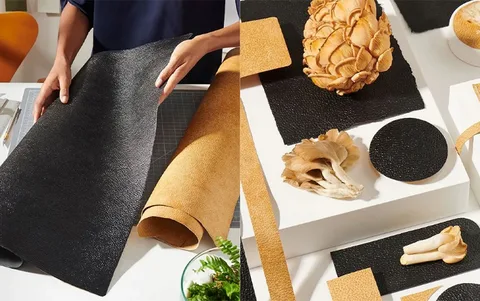
Fashion has always reflected the way people think about the world around them. Fabrics that once symbolized luxury can lose their appeal as consumer priorities change, while entirely new materials emerge to answer questions the industry could no longer ignore. Few materials have sparked as much curiosity in recent years as mushroom leather, a plant-inspired alternative that promises the look and feel of traditional leather without relying on animal hides.
What makes mushroom leather especially fascinating is that it is no longer a futuristic experiment hidden inside research labs. Luxury designers, footwear brands, and material scientists are actively investing in its development, hoping it can solve some of fashion’s biggest environmental challenges without sacrificing quality or style. While it is still finding its place in the market, its rapid progress suggests this material deserves far more attention than simply being labeled another sustainable trend.
What Is Mushroom Leather?
Despite its name, mushroom leather is not made from the cap of a mushroom that ends up on your dinner plate. Instead, it is produced from mycelium, the underground network of thread-like fibers that allows fungi to grow and spread. Think of mycelium as nature’s own weaving system. Under carefully controlled conditions, these fibers grow into dense sheets that can be processed into a material remarkably similar to leather.
Scientists discovered that mycelium grows quickly, requires relatively few natural resources, and can be shaped during cultivation. Instead of raising livestock for years before producing leather, manufacturers can grow sheets of mycelium in a matter of weeks. After harvesting, the material is compressed, treated, and finished to improve durability, flexibility, and appearance.
The production process generally follows these stages:
- Growing mycelium using agricultural waste such as sawdust or corn husks.
- Allowing the fungal network to expand into thick mats.
- Harvesting the material once it reaches the desired density.
- Compressing and treating the surface for strength.
- Applying natural or low-impact finishes to achieve different textures and colors.
- Cutting and preparing the material for fashion production.
Although different companies use proprietary methods, the basic principle remains the same. Instead of harvesting animal skin, manufacturers cultivate an entirely new material.
Why the Fashion Industry Is Paying Attention
Traditional leather has long represented durability and luxury, but producing it comes with environmental and ethical concerns. Raising livestock requires enormous amounts of land, water, and feed, while leather tanning often involves chemicals that can affect workers and surrounding ecosystems if not managed responsibly.
Consumers have become far more aware of these issues. They still want premium products, but many also expect brands to reduce their environmental impact. That shift has encouraged designers to search for alternatives that deliver both quality and responsibility.
Mushroom leather appeals because it addresses several concerns at once.
| Traditional Leather | Mushroom Leather |
| Derived from animal hides | Grown from mycelium |
| Long production timeline | Can be cultivated within weeks |
| High water and land requirements | Uses significantly fewer natural resources |
| Livestock emissions contribute to environmental impact | Lower environmental footprint during production |
| Depends on animal agriculture | Animal-free production process |
For fashion companies working toward sustainability goals, this material offers an opportunity to rethink how luxury products are made.
It Looks Surprisingly Like Premium Leather
One reason mushroom leather has generated so much excitement is its appearance. Early alternatives to leather often looked synthetic or felt stiff, making them less appealing to customers accustomed to premium materials. Mushroom leather has changed that perception.
Manufacturers can create finishes that resemble smooth calfskin, textured pebble leather, or soft suede-like surfaces. The material can also accept dyes and surface treatments, allowing designers to experiment with colors and finishes without dramatically changing the production process.
Many consumers who have handled modern mushroom leather products describe them as:
- Soft yet supportive.
- Flexible enough for handbags and footwear.
- Lightweight compared to traditional leather.
- Comfortable to touch.
- Visually difficult to distinguish from genuine leather in many applications.
While some differences remain, especially in long-term aging, the gap between traditional leather and mycelium-based materials continues to narrow.
Sustainability Goes Beyond Being Animal-Free
It would be easy to assume mushroom leather is environmentally friendly simply because it doesn’t come from animals. The reality is more interesting. Its sustainability advantages extend well beyond that single point.
Mycelium grows rapidly without requiring years of farming. Many producers feed it agricultural by-products that would otherwise become waste. Growing the material indoors also reduces the amount of land needed compared with livestock farming, making production more predictable and efficient.
Other environmental advantages include:
- Lower water consumption.
- Reduced greenhouse gas emissions during production.
- Faster cultivation cycles.
- Less agricultural land required.
- Opportunity to use renewable feedstock.
- Potential for biodegradable formulations depending on the finishing process.
These qualities explain why sustainability experts frequently mention mycelium when discussing the future of next-generation textiles.
Luxury Fashion Is Already Testing Mushroom Leather
When a new material appears, the first question many people ask is whether major fashion houses actually trust it. In the case of mushroom leather, the answer is increasingly yes. Several luxury brands have partnered with biotechnology companies to experiment with mycelium-based materials in handbags, footwear, and accessories. These collaborations are still relatively limited, but they show that mushroom leather has moved beyond laboratory research into commercial product development.
Luxury labels are particularly careful about introducing new materials because their customers expect exceptional quality. Every handbag, wallet, or pair of shoes must meet high standards for appearance, durability, and craftsmanship. The willingness of premium brands to invest in mushroom leather suggests they see genuine long-term potential rather than a passing sustainability trend.
Current fashion applications include:
- Designer handbags.
- Sneakers and casual footwear.
- Wallets and cardholders.
- Belts.
- Watch straps.
- Small luxury accessories.
- Limited-edition fashion collections.
Most brands are starting with smaller leather goods before expanding into larger product categories, allowing them to test customer response while refining production techniques.
The Technology Is Improving Faster Than Many Expected
One of the biggest criticisms of early leather alternatives was durability. Some cracked easily, while others struggled with flexibility or developed visible wear after limited use. Mushroom leather has benefited from years of material science research, making today’s versions significantly stronger than the earliest prototypes.
Researchers continue to experiment with different fungal species, cultivation methods, and finishing techniques to improve performance. The goal is not simply to imitate leather but to create a material with its own strengths. Some manufacturers are working on water resistance, while others focus on improving tensile strength or developing finishes that age gracefully over time.
Research efforts are currently focused on:
- Increasing durability for everyday products.
- Improving resistance to moisture.
- Creating more consistent textures.
- Scaling production without reducing quality.
- Developing biodegradable finishing methods.
- Reducing manufacturing costs.
Every improvement brings mushroom leather closer to widespread commercial adoption.
Can Mushroom Leather Replace Traditional Leather?
This is probably the most debated question in sustainable fashion. The short answer is not yet, at least not completely. Traditional leather still has decades of manufacturing expertise behind it and remains unmatched in some areas, particularly for heavy-duty products that experience years of constant wear.
That said, replacement doesn’t have to happen overnight. Fashion rarely changes through a single dramatic shift. Instead, materials gradually earn consumer trust by proving themselves in specific categories before expanding further.
The comparison looks something like this:
| Feature | Traditional Leather | Mushroom Leather |
| Appearance | Premium natural texture | Very similar with modern finishes |
| Durability | Excellent for long-term use | Improving rapidly with new technology |
| Animal-free | No | Yes |
| Environmental impact | Generally higher | Generally lower |
| Production speed | Months to years | Weeks |
| Availability | Widely available | Still relatively limited |
Rather than replacing every leather product immediately, mushroom leather is more likely to become another premium option alongside traditional materials.
Challenges Still Stand in the Way
Every promising innovation faces obstacles before becoming mainstream, and mushroom leather is no exception. Production remains relatively small compared to conventional leather manufacturing, which makes products more expensive. Limited supply also means many brands cannot yet use it across their entire product range.
Another challenge involves consumer expectations. Buyers often compare every new material directly to high-quality leather that has been refined for centuries. Even if mushroom leather performs well, it must earn trust through years of real-world use rather than laboratory testing alone.
Some of the biggest hurdles include:
- Higher production costs.
- Limited manufacturing capacity.
- Smaller supply chains.
- Ongoing durability improvements.
- Consumer awareness.
- Availability in mass-market fashion.
These challenges are significant, but they are also common for emerging technologies. Many materials that seem ordinary today once faced similar barriers before production became more efficient.
Why Consumers Are Becoming More Interested
Modern shoppers are asking different questions than they did a decade ago. They still care about appearance and quality, but they’re also curious about how products are made, where materials come from, and what happens when an item reaches the end of its life.
Younger consumers, in particular, tend to reward brands that experiment with lower-impact materials. They often see innovation as part of luxury rather than something separate from it. Owning a handbag made from mushroom leather isn’t just about sustainability. For many buyers, it’s also about supporting new ideas and participating in the future of fashion.
Consumers are increasingly looking for products that offer:
- High-quality craftsmanship.
- Responsible sourcing.
- Animal-free alternatives.
- Modern design.
- Transparent manufacturing practices.
- Long-lasting value.
As awareness grows, mushroom leather has the potential to appeal to shoppers who want both style and substance.
What This Means for Fashion Designers
For designers, mushroom leather opens creative possibilities that extend beyond sustainability. Since mycelium grows into molds during cultivation, future manufacturing could allow materials to be shaped before they’re even cut. That may reduce production waste and inspire entirely new approaches to product design.
Designers also gain access to textures and finishes that aren’t limited by the characteristics of animal hides. Instead of working around natural imperfections, manufacturers can produce sheets with greater consistency, giving designers more flexibility during production.
Potential opportunities include:
- Custom textures grown during cultivation.
- Reduced material waste.
- Greater design consistency.
- New approaches to luxury craftsmanship.
- More sustainable product development.
- Collaboration between fashion and biotechnology.
As material science continues to evolve, designers may find themselves creating products that were previously impossible using conventional leather.
Frequently Asked Questions
1. Is mushroom leather made from actual mushrooms?
Not exactly. It is primarily made from mycelium, the underground root-like network of fungi, rather than the mushroom itself.
2. Is mushroom leather biodegradable?
Some forms can be biodegradable depending on how they are processed and finished. Protective coatings and treatments may affect how the material breaks down over time.
3. Is mushroom leather durable enough for everyday products?
Modern mushroom leather has become much more durable than early versions and is already being used for handbags, shoes, and accessories. Researchers continue working to improve its long-term performance.
4. Why is mushroom leather more expensive?
Production is still relatively small compared to traditional leather manufacturing. As technology advances and output increases, costs are expected to become more competitive.
5. Will mushroom leather completely replace animal leather?
That is unlikely in the near future. It is more realistic to expect mushroom leather to become one of several premium material choices, giving consumers and designers greater flexibility while reducing the industry’s environmental footprint.
Conclusion:
Mushroom leather represents more than an alternative to traditional leather. It reflects a broader shift in how fashion approaches materials, innovation, and responsibility. While production challenges remain, the progress made over the past few years suggests this once-unusual idea is steadily becoming a practical option for designers, luxury brands, and consumers who believe style and sustainability can exist in the same wardrobe.
Call to Action
If you’re interested in where fashion is headed, keep an eye on the materials behind the products, not just the designs themselves. Learning about innovations like mushroom leather offers a glimpse into an industry that is rethinking how clothing and accessories are created. The next iconic handbag or pair of sneakers may owe its story not to a traditional tannery, but to a remarkable network of fungi growing quietly beneath the surface.