

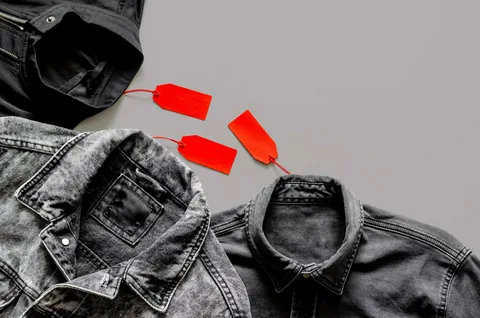
Most shoppers assume a higher price tag means better materials, rising labor costs, or inflation. Tariffs rarely enter the conversation. Yet a policy signed thousands of miles away can quietly change the price of the jeans hanging in your closet or the sneakers sitting in your online cart. The increase may only be a few dollars on a single item, but across millions of garments, those added costs reshape how fashion companies source, manufacture, and sell clothing.
The effect reaches far beyond luxury brands or international retailers. Whether you’re buying a $20 T-shirt from a fast-fashion chain or investing in a premium winter coat, there’s a good chance tariffs have influenced the final price. They don’t always appear on receipts, and brands rarely advertise them, but they’re woven into today’s fashion economy. Understanding how they work offers a clearer picture of why wardrobes are becoming more expensive, even when the clothes themselves haven’t changed much.
What Are Clothing Tariffs?
A tariff is a tax imposed on imported goods. When clothing crosses international borders, governments may charge businesses a percentage of the product’s value before it can enter the country. The importing company pays that fee, although the cost often works its way through the supply chain until consumers absorb part of it through higher retail prices.
Fashion is especially vulnerable because very few brands manufacture every component in a single country. Cotton may come from one region, fabric from another, buttons from somewhere else, and final assembly from an entirely different nation. By the time one jacket reaches a store shelf, it may have crossed several borders, each with its own trade policies.
Common reasons governments introduce tariffs include:
- Protecting domestic manufacturers.
- Responding to international trade disputes.
- Encouraging local production.
- Reducing dependence on foreign suppliers.
- Generating government revenue.
Why Fashion Depends on Global Supply Chains
Modern fashion isn’t built inside one factory. It’s built across an international network where different countries specialize in different stages of production. A brand may design a collection in Europe, source fabrics from Asia, manufacture garments in Vietnam or Bangladesh, and distribute finished products through warehouses in North America or the Middle East.
This system exists because specialization keeps production costs lower and allows brands to work with suppliers that have decades of expertise. It also means a single policy change can ripple through every stage of production before customers even notice.
A simplified fashion supply chain looks something like this:
| Production Stage | Typical Activity |
| Raw materials | Cotton, wool, polyester production |
| Textile manufacturing | Fabric weaving and dyeing |
| Garment production | Cutting, sewing, finishing |
| International shipping | Ocean freight and logistics |
| Distribution | Warehouses and retailers |
| Consumer purchase | Physical stores and e-commerce |
How Tariffs Increase Clothing Prices
Tariffs don’t automatically raise prices by the exact percentage charged by governments. Businesses have several options when new import taxes appear. Some absorb part of the expense to remain competitive. Others negotiate with suppliers, reduce marketing budgets, or increase retail prices.
Eventually, though, someone pays.
If a retailer imports thousands of jackets and faces millions of dollars in additional duties, maintaining previous prices becomes increasingly difficult. Even brands with healthy profit margins cannot absorb higher import costs indefinitely.
When clothing tariffs increase, companies often respond by:
- Raising retail prices gradually.
- Reducing seasonal discounts.
- Producing fewer styles.
- Ordering smaller inventories.
- Switching to lower-cost materials.
- Moving production to different countries.
Why Brands Don’t Simply Move Their Factories
People often ask a straightforward question: if tariffs become expensive, why don’t companies just relocate production?
The answer sounds simple until you look at how manufacturing actually works. Building a new supplier network isn’t like changing office space. Brands spend years developing relationships with factories, training workers, maintaining quality standards, and coordinating shipping schedules. Those partnerships can’t be replaced overnight.
Moving production also creates new risks. A country with lower tariffs may lack experienced textile manufacturers, reliable shipping infrastructure, or access to the same raw materials. Saving money in one area can increase costs somewhere else.
Before relocating production, fashion companies usually evaluate factors such as:
- Labor availability and skills.
- Manufacturing capacity.
- Shipping costs.
- Political stability.
- Trade agreements.
- Product quality.
- Delivery times.
- Environmental regulations.
The Fast Fashion Dilemma
Fast fashion depends on speed and predictable costs. New collections appear every few weeks, leaving little room for unexpected expenses. Even small tariff increases can disrupt that model because companies operate with relatively thin margins on many products.
Retailers known for affordable clothing often respond by spreading higher costs across hundreds of products instead of dramatically increasing the price of one item. That makes tariff-driven inflation harder for shoppers to notice, even though it affects nearly every purchase.
Instead of one dramatic price jump, consumers may experience:
- Slightly higher prices across entire collections.
- Fewer promotional sales.
- Reduced product variety.
- Smaller inventory levels.
- Less frequent collection launches.
- Lower-cost packaging or trims.
Premium Brands Face Different Challenges
Luxury and premium fashion labels aren’t immune to tariffs, but they have more flexibility. Customers buying a $700 handbag are generally less sensitive to a $40 price increase than shoppers purchasing a $30 sweatshirt.
That doesn’t mean premium brands ignore trade policy. Many invest heavily in diversifying suppliers, expanding manufacturing locations, and building regional production hubs to reduce future risk.
Here’s how different segments often respond:
| Fashion Segment | Common Response to Tariffs |
| Fast fashion | Gradual price increases and sourcing changes |
| Mid-market brands | Mix of supplier negotiations and retail price adjustments |
| Premium brands | Greater supply chain diversification |
| Luxury brands | Regional production and selective price increases |
Why Supply Chain Diversification Has Become a Business Priority
The pandemic exposed weaknesses in global supply chains, and trade tensions reinforced the lesson. Fashion companies realized that relying too heavily on one manufacturing country could create major financial risks. Tariffs became another reminder that production decisions aren’t based solely on labor costs anymore.
As a result, many brands are spreading manufacturing across several countries instead of concentrating it in one location. Diversification doesn’t eliminate tariffs, but it gives businesses more flexibility when trade policies change unexpectedly.
Many retailers are now adopting strategies such as:
- Expanding manufacturing into multiple countries.
- Building relationships with backup suppliers.
- Producing closer to major consumer markets.
- Increasing inventory of best-selling products.
- Investing in supply chain technology for better forecasting.
- Reducing dependence on a single sourcing region.
The Consumer Rarely Sees the Full Story
When clothing prices rise, shoppers usually blame inflation or assume brands are charging more to increase profits. In reality, the price printed on a tag reflects dozens of decisions made long before a garment reaches the store.
Import duties, shipping costs, currency fluctuations, labor expenses, warehouse operations, and retailer markups all contribute to the final figure. Tariffs are only one piece of that puzzle, but they’re often one of the least visible.
A simplified pricing journey looks like this:
| Cost Factor | Impact on Final Price |
| Raw materials | Base production cost |
| Manufacturing | Labor and factory expenses |
| Tariffs | Import taxes on finished goods or materials |
| Freight | International transportation costs |
| Warehousing | Storage and inventory management |
| Retail operations | Store, staffing, and marketing expenses |
| Profit margin | Business sustainability and future investment |
Winners and Losers in a Tariff-Driven Market
Trade policies don’t affect every business equally. Some companies adapt quickly because they already have diversified supplier networks. Others struggle because their operations depend heavily on one manufacturing location.
Smaller fashion businesses often face the biggest challenges. Unlike multinational retailers, they usually lack the buying power to negotiate lower supplier prices or quickly relocate production. Even modest tariff increases can significantly reduce their margins.
Here’s how different groups are typically affected:
| Stakeholder | Likely Outcome |
| Large global brands | Greater flexibility and negotiating power |
| Independent fashion labels | Higher financial pressure |
| Domestic manufacturers | Potential increase in demand |
| Consumers | Higher prices and fewer promotions |
| Third-party suppliers | Shifting production opportunities |
Can Tariffs Ever Benefit the Fashion Industry?
Although tariffs are often associated with higher prices, they aren’t always viewed negatively. Governments sometimes use them to encourage local manufacturing, protect domestic industries, or reduce reliance on overseas production.
For countries with established textile industries, this can create opportunities for local factories, shorten delivery times, and generate employment. Still, these benefits rarely appear overnight. Building manufacturing capacity takes years, and many countries simply don’t have the infrastructure to replace global supply chains immediately.
Potential advantages include:
- Increased domestic manufacturing.
- New investment in local textile industries.
- Reduced dependence on overseas suppliers.
- Greater supply chain resilience.
- Faster regional production for certain products.
Potential drawbacks include:
- Higher consumer prices.
- Reduced product variety.
- Increased operating costs for retailers.
- Slower expansion into new markets.
- Greater uncertainty for international sourcing.
What Smart Fashion Businesses Are Doing Now
Leading retailers aren’t waiting for trade policies to stabilize. Instead, they’re redesigning supply chains to become more adaptable. Flexibility has become just as valuable as low production costs.
Many companies are also investing in technology that provides real-time visibility into sourcing, shipping, and inventory. Better data allows them to respond more quickly when tariffs, transportation costs, or geopolitical events disrupt normal operations.
Current business priorities include:
- Using AI to forecast inventory demand.
- Developing relationships with multiple suppliers.
- Increasing regional manufacturing where practical.
- Improving inventory planning.
- Negotiating long-term supplier contracts.
- Monitoring trade policy more closely than ever before.
What This Means for Your Wardrobe
Most shoppers won’t calculate import duties before buying a jacket, and they shouldn’t have to. Still, understanding how clothing reaches store shelves explains why prices don’t always move in predictable ways.
A price increase doesn’t necessarily mean a brand is making more profit. Sometimes it’s responding to higher import costs. Sometimes it’s protecting future inventory. Other times it’s trying to avoid passing the full burden onto consumers while maintaining healthy operations.
The next time you notice fewer discounts, slightly higher prices, or collections arriving later than expected, the explanation may have less to do with fashion trends than with global trade.
Frequently Asked Questions
1. What are clothing tariffs?
Clothing tariffs are taxes governments impose on imported apparel and textiles before they enter a country’s market.
2. Do tariffs always increase clothing prices?
Not always. Some brands absorb part of the added cost, but many eventually pass at least a portion of it to consumers through higher retail prices.
3. Why don’t fashion brands manufacture everything locally?
Many countries lack the infrastructure, skilled workforce, or production capacity needed to manufacture clothing at the scale global brands require.
4. Which fashion companies are affected the most?
Businesses with heavy dependence on imported goods or a single manufacturing country typically experience the greatest impact.
5. Will clothing prices continue rising because of tariffs?
Tariffs are only one factor. Shipping costs, labor expenses, raw material prices, currency exchange rates, and consumer demand also influence what shoppers ultimately pay.
Conclusion:
Tariffs rarely make headlines when people discuss fashion, yet they quietly shape everything from sourcing decisions to the price tag on your favorite jacket. As brands rethink their supply chains and governments continue adjusting trade policies, the cost of clothing will depend on far more than fabric and design. Understanding those hidden forces makes every purchase a little easier to put into perspective.
Call to Action
If you enjoy learning how business decisions influence the fashion industry, keep exploring the forces behind pricing, manufacturing, and retail strategy. The more you understand the journey behind a garment, the easier it becomes to make informed shopping choices and recognize the economic stories stitched into every piece of clothing.